The Messenger Band highlights plight of women workers
📅 February 13, 2024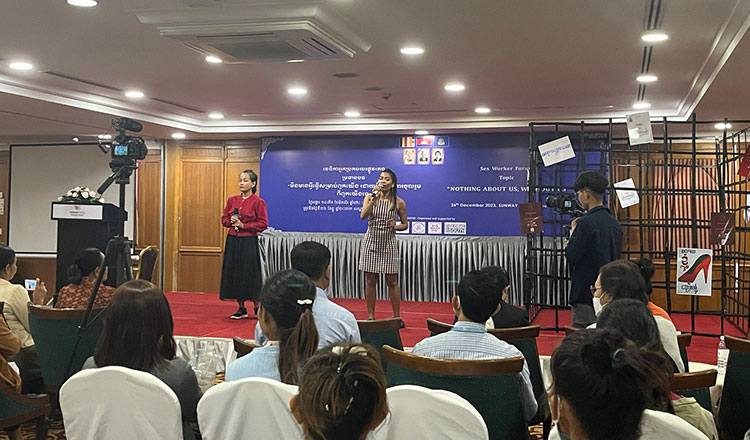
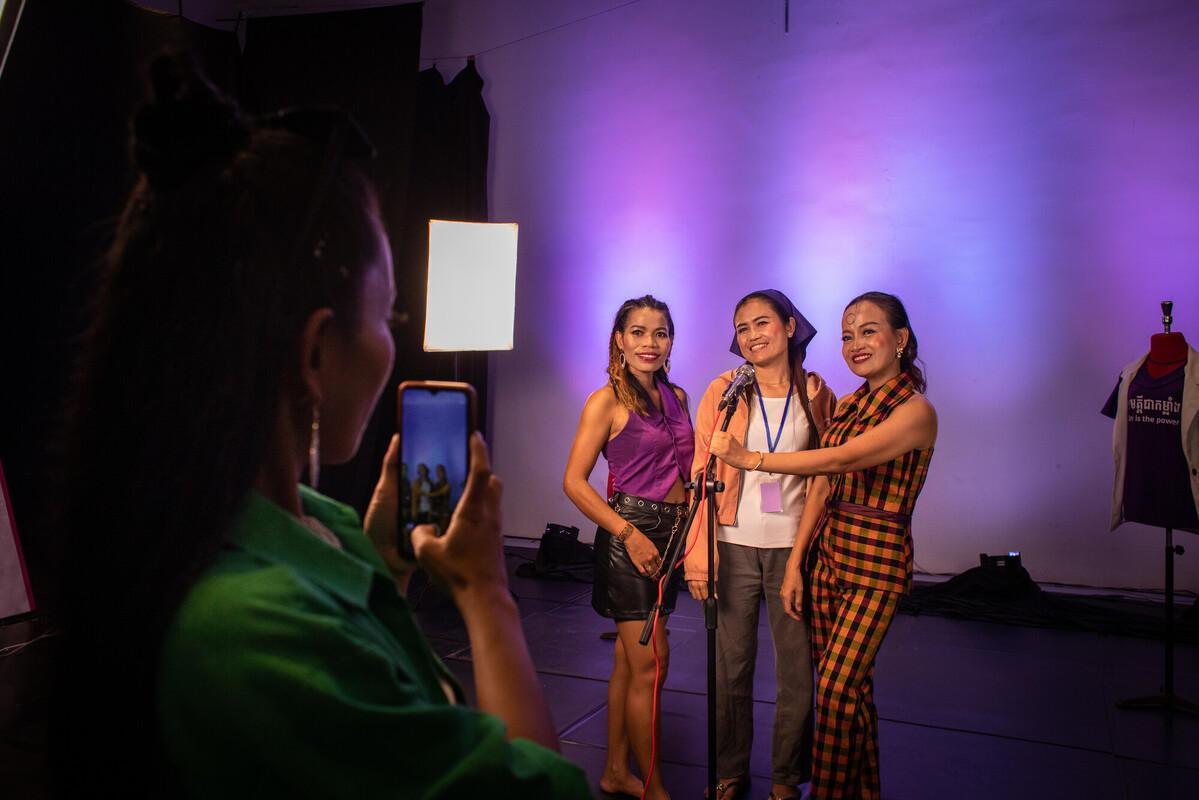
During a public event dedicated to protecting the rights of sex workers in Cambodia, two women in their 30s appear on stage, smiling with confidence at an audience of almost 200 who break into applause as Messenger Band (MB) sings:
“Although we are selling services, we want to live like others.
We want freedom and a good life in society.
We don’t want insults, labelled as sluts.”
The song is an artistic representation of the desires of sex workers in Cambodia, who have been suffering from the criminalisation of their profession, although prostitution is considered the oldest job in the world.
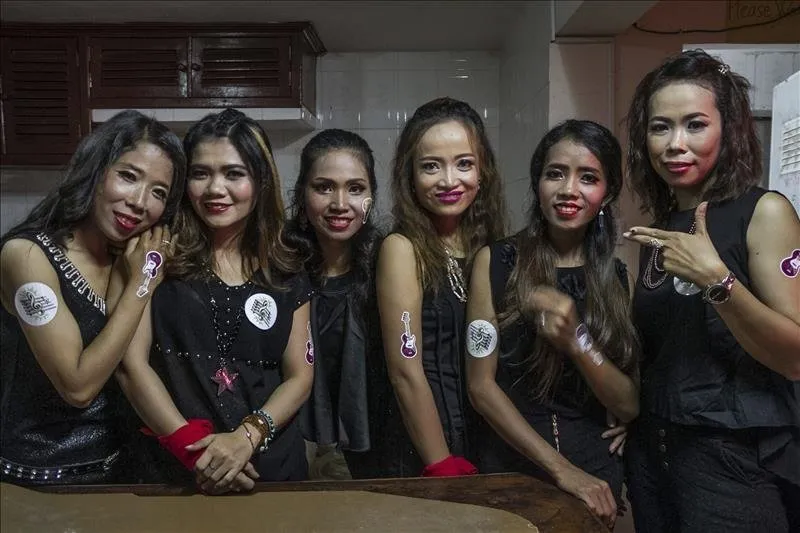
For nearly 20 years, the girl band, known as Messenger Band Cambodia, has been using music to ask the public to reflect on the wellbeing and rights of Cambodian women from different backgrounds.
Formed in 2005 by a group of former female garment workers who have experienced many kinds of pain during their time working in the garment sector, MB registered with the Ministry of Interior four years after the group got together.
The garment factory may seem to represent a workplace where employees enjoy a sense of safety and contentment, but the reality is in stark contrast that must not be ignored.
In a recent interview, two of the band’s five members spoke about their experiences.
Born in Kampong Speu province, singer Chea Sarat was forced to leave her hometown in 2011 to work as a garment worker.
As a member of MB, Sarat reflects on the many agonising experiences she has endured within the confines of the factory walls.
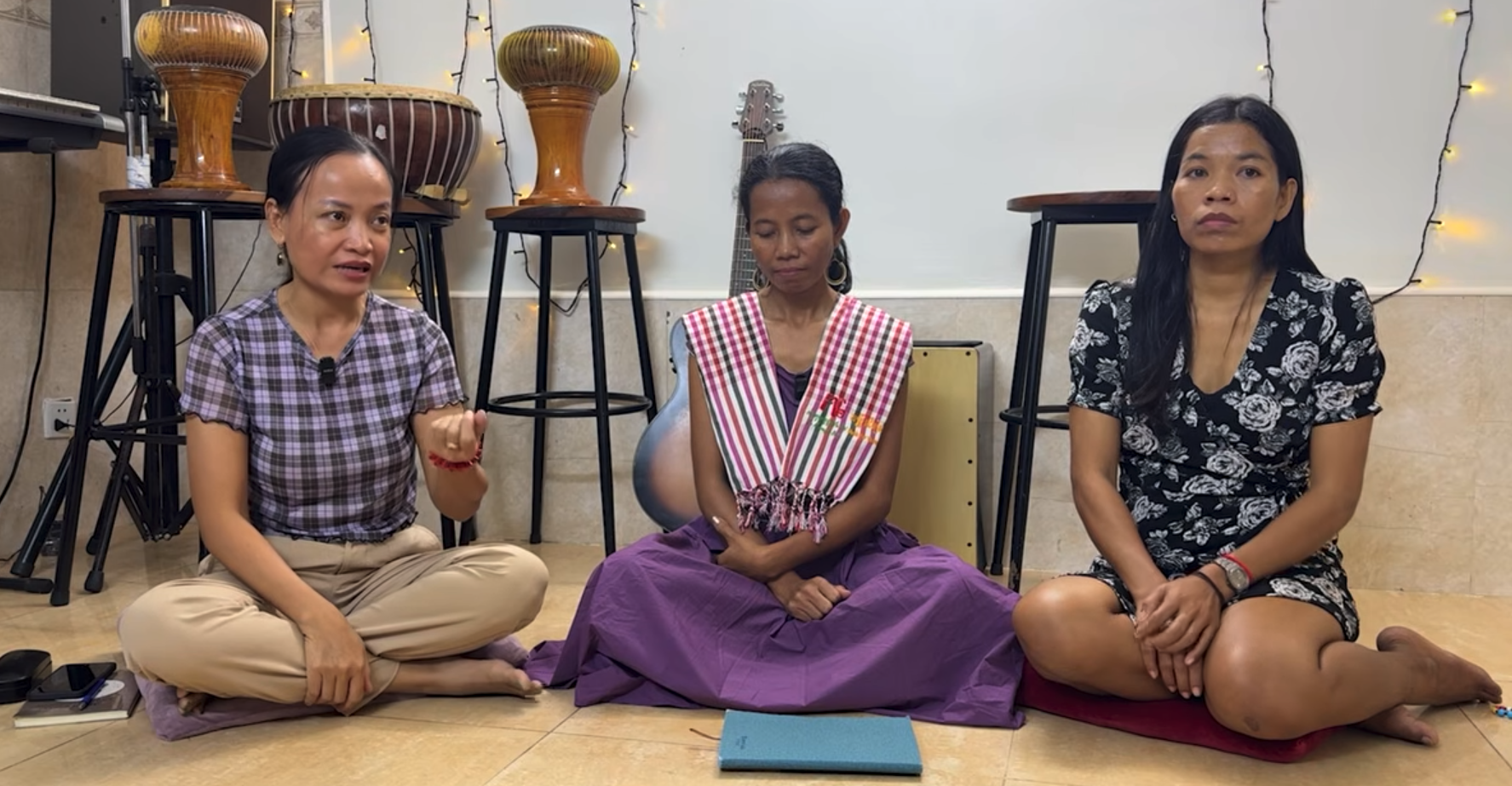
 Messenger Band members Chea Sarat (L) and Hem Sela being interviewed by Khmer Times at a coffee shop in Phnom Penh. KT/Yarn Soviet
The weight of exploitation, discrimination, and the violation of basic rights presses heavily on her. Day after day, she is coerced into toiling overtime, her fatigue a testament to the relentless demands imposed by her employers.
“We are entitled to our rights, yet oppression persists,” Sarat says, her voice tinged with bitterness.
The pain of being marginalised, subjected to relentless pressure, and having one’s rights trampled on serves as the impetus behind forming MB.
“Our band exists to amplify the voices of the suffering,” Sarat asserts. “Through making music, we strive to vocalise the harrowing realities that unfold within the factory walls.”
It is not only the story of garment workers that finds expression in MB’s songs, but the band also sheds light on the plight of farmers and sex workers.
MB’s mission is to give a voice through song to vulnerable groups and to raise awareness about the issues they face among the public and seek support for their safety both physically and mentally.
MB’s ultimate aim is to inspire positive change within society, combat violence, and motivate people to dismantle the walls of social discrimination.
“The work of MB encompasses extensive community research, delving deep into the challenges faced by garment workers, farmers, and sex workers alike. These stories are then carefully woven into the songs, short films, and various artistic expressions,” Sarat explained.
Furthermore, the band spearheads campaigns aimed at disseminating awareness among stakeholders connected to these issues.
“Utilising a range of artistic mediums, including live performances in communities, MB effectively disseminates their message,” Sarat says. “The allure of the arts draws people in, ensuring that the information delivered through art resonates more deeply within their hearts.”
“With each community performance, the band attracts the attention of local authorities, further amplifying the reach of their message.”
In addition to raising awareness about women’s concerns, MB places a strong emphasis on skill development.
They recognise the power of creative talents and actively teach these skills to women within the community, based in Siem Reap, Battambang, and other targeted provinces.
By nurturing their artistic abilities, MB empowers these women to express themselves and advocates for their rights. This approach extends beyond mere awareness-raising, as it equips individuals with the tools they need to communicate their experiences effectively.
However, MB is not immune to its own set of challenges, particularly in the face of public opinion and misconceptions.
“Society often underestimates the value and significance of bands, perceiving them solely as singing and dancing groups without recognising their potential for social impact,” Sarat says.
She added, “However, I never want to give up as I understand the transformative power of art – the ability to articulate the deep traumas hidden within my heart and to be a voice for those who share similar experiences.”
Singer Hem Sela, hailing from Takeo province, recounts her journey with similar experiences.
She shared that she was thrust into factory work before she even reached the age of 18. Undeterred by the challenges that awaited her, Sela joined MB, and her presence today is a testament to the closure of the factory she once worked for.
Sela’s entrance into the world of factory labour at a tender age illuminates the struggles faced by countless young workers. Through her involvement in MB, Sela finds solace in the power of music as a conduit for change.
Her affiliation with MB dates back to 2019, and Sela discloses to Khmer Times the band’s unwavering commitment to connecting with communities.
“Our survey within the community is an annual pilgrimage, and the culmination of our efforts is the release of our albums every two or three years,” Sela says.
Together with her bandmates, she weaves the tapestry of their collective experiences, infusing each note with the echoes of resilience, determination, and the unwavering spirit of a community yearning to be heard.
Recently, MB has just released a 2020 music album called “Women’s Heroism”, which consists of several songs named “The Impact of COVID-19” and “Memory”. All these songs are reflections of the current situation of vulnerable groups.
“Every piece of music, poem, and short clip we make always reflect the women whose stories we represent and we double check whether it reflects their real situation or not before publishing them,” Sela says.
The members of MB emphasise the importance of conducting reflections both before and after releasing their songs.
They understand the significance of ensuring that their music remains a true reflection of the prevailing situation.
The impact of MB extends far beyond the borders of Cambodia, reaching neighbouring countries and even a wider region.
Not only has MB influenced Cambodia, but it has also garnered attention and had an impact in countries such as the Philippines, Bangladesh, India, Indonesia, and Thailand.
Sarat, speaking on behalf of MB, emphasises the importance of a collective mindset rooted in a desire to contribute to societal transformation.
She highlights the belief that everyone has a role to play in creating meaningful change within their own communities.
Aside from conveying the experiences of industrial workers, sex workers, and farmers, Messenger Band promotes Chapei Dong Veng in collaboration with the Community of Living Chapei.
Pich Sarath, Director of the Living Chapei Community, noted that Messenger Band worked with the community to set up “Neary Chapei Dong Veng” with the purpose of promoting Chapei Dong Veng via women.
“Neary Chapei Dong Veng” is a group of ladies from the Cambodian Living Chapei who play the Chapei, who formed this group after seeing a dearth of female participation in Chapei art.
Chapei Dong Veng, a Cambodian musical tradition deeply interwoven with people’s lives, customs, and beliefs, was added to the UNESCO World Heritage List on November 30, 2016.
According to Sarath, the Community of Living Chapei and MB share a common goal: to raise the Chapei Dong Veng.
“It is good because we don’t only work to support women, but we also bring back the traditional instrument that most people have forgotten and youngsters don’t know about to catch the attention of the public,” said Sarath.
Furthermore, the use of art to raise women’s voices serves as a reminder to the public to understand women’s hearts.
At the end of the interview, he applauded MB for their efforts to raise awareness of women’s issues and promote gender equality, “since most men now recognise that we are all equal regardless of gender.”
Nop Sreymao / Khmer Times
Link: Khmer Times
← Back to News